Outdoor Dining in Britain Is Basically a Competitive Sport
Seany McDonaldThere are only two types of British people. Those who admit it's too cold to eat outside. And those sitting in the garden wearing a coat, a scarf, and possibly a blanket while confidently announcing: "It's actually quite warm in the sun."
The rest of us are somewhere in the middle. We know it's cold. We know we're being ridiculous. But we're staying outside anyway. Because outdoor dining in Britain isn't really about the weather. It's about determination.
The Great British Refusal to Admit Summer Is Over
Most countries have clearly defined seasons. Britain has negotiations. The calendar says autumn. The thermometer says 14 degrees. And somebody is still lighting the BBQ.
Every year the same thing happens. September arrives and sensible people start moving indoors. British people respond by buying:
- patio heaters
- fire pits
- outdoor blankets
- weatherproof cushions
- enough fairy lights to be visible from space
We're not extending summer. We're actively refusing to let it leave. And honestly, you have to admire the commitment.
The Patio Heater Economy
At some point patio heaters stopped being garden accessories and became essential British infrastructure. The temperature drops slightly. Nobody suggests going indoors. Instead someone says: "Shall we stick the heater on?"
Within minutes there's enough heat being generated to warm a small industrial estate. Everyone gathers around it like campers discovering fire for the first time. The amazing thing is that patio heaters seem to add about three degrees of actual warmth and about twenty degrees of psychological warmth. Which is usually enough.
Why Outdoor Dining Feels Better
Nobody really talks about this, but food genuinely tastes better outside. Scientifically? No idea. Emotionally? Absolutely. A burger eaten indoors is lunch. A burger eaten outdoors suddenly becomes an event. The same applies to coffee, wine, pizza, and takeaways.
For some reason sitting outside automatically makes everything feel more enjoyable. Perhaps it's the fresh air. Perhaps it's the change of scenery. Or perhaps we're simply celebrating the fact it isn't raining for once. Whatever the reason, outdoor dining has a completely different energy. People relax faster. Conversations drift more naturally. Nobody seems in a hurry. And before you know it, somebody is opening another bottle because "we may as well."
The Garden Table Effect
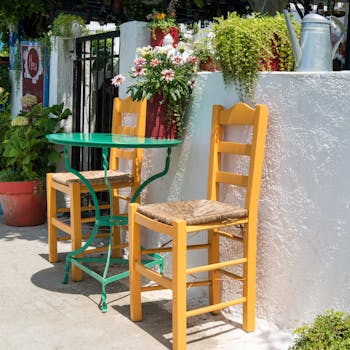
Every good outdoor gathering eventually revolves around one thing The table. Not the BBQ. Not the music. Not even the weather. The table. It's where people gather, where drinks appear, where snacks slowly multiply, where stories get told for the third time, and where somebody inevitably says: "We should definitely do this more often."
A good garden table quietly becomes the centre of the whole evening. Not because it's flashy — because it works. The best ones feel effortless. Large enough for food, drinks and friends. Comfortable enough that nobody wants to leave. Practical enough for real life rather than a showroom photo.
The Great British Seating Crisis
Every outdoor gathering starts with a sensible plan. Six guests. Six chairs. Perfect. Then reality arrives. A neighbour pops in. A friend brings their partner. Somebody turns up with two children and a dog. Suddenly there are twelve people and seven seats.
This is how British gardens operate. No matter how much planning happens, outdoor entertaining always ends with someone borrowing dining chairs from indoors — usually while balancing a plate and a drink. This is why larger outdoor dining tables have become so popular. People want spaces that work for actual entertaining, not just spaces that look nice in photographs.
Why the Best Gardens Aren't Perfect
Social media has convinced people that every garden needs matching cushions, perfect planting, designer accessories, and professionally styled furniture. But the gardens people actually remember are rarely the perfect ones. They're the slightly chaotic ones — where somebody burns the halloumi, the cushions get left outside, blankets appear after sunset, music gets louder as it gets darker, and nobody notices the time.
Those are the evenings people talk about later. Not because everything went perfectly. Because everyone enjoyed themselves.
The Unofficial Rules of British Outdoor Living
Rule one: never trust the forecast. Rule two: always have a backup plan. Rule three: ignore rule one and host the BBQ anyway.
Every experienced British outdoor host knows that weather apps are merely suggestions. The forecast might say rain. The sky might look threatening. But if there's even the slightest chance of sunshine, we'll give it a go. And surprisingly often, it works. At least for a while.
The Real Secret to Outdoor Dining
The funny thing about outdoor living in Britain is that it was never supposed to be perfect. That's why it works. Nobody expects Mediterranean weather. Nobody expects endless sunshine. What people want is simple — a comfortable place to sit, good food, good company, and an excuse to stay outside a little longer than they probably should.
Because years later, nobody remembers whether the temperature was exactly right. They remember laughing around the table. They remember staying out after dark. And they remember one of those rare British evenings where, against all odds, the weather behaved itself. At least until everyone had finished dessert.